
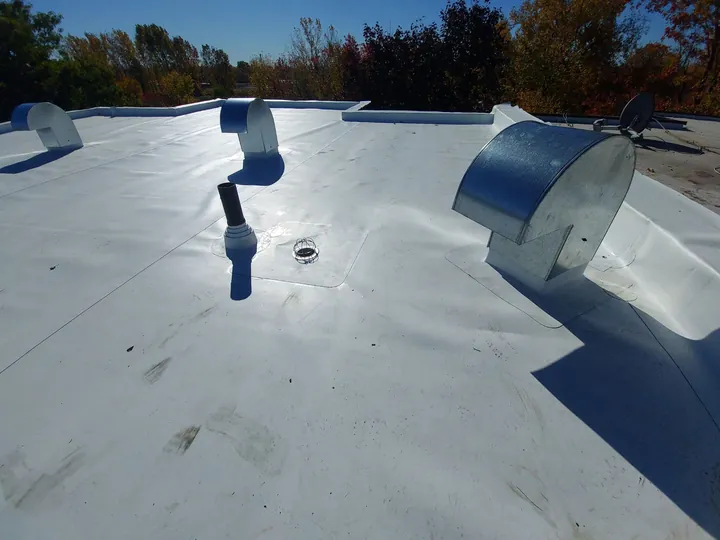
A drainage problem should be assessed by separating an obstructed outlet from a slope or detail that holds water back. The response may involve maintenance, connections, slope planning or other elements requiring the appropriate specialists.
Observe what happens after rain
Photographs taken from a safe location, with the date and elapsed time after rainfall, help explain the situation. Note whether water repeatedly collects in the same area and whether an interior leak occurs at the same time. One observation during heavy rain does not replace an examination of the roof and its drainage outlets.
Identify what restricts drainage
A blocked drain, raised connection and low area require different responses. The assessment considers the route water takes towards outlets and the obstacles it encounters. If the issue appears related to interior piping or movement in the supporting structure, clarify the additional investigation needed. This helps avoid treating the visible symptom while overlooking its cause.
Plan corrections with reroofing
During replacement, tapered insulation layout and connection adjustments can be considered with the selected roofing system. Available heights at parapets, equipment and access points may limit the options. The proposal should identify treated areas, affected details and any elements needing particular design or validation. Drainage planning is most useful before the new assembly is installed.
Prepare for our conversation
- Dated photographs of ponding areas
- Known locations of drains and outlets
- Cleaning and leak history
- Recent work or rooftop equipment additions
Your questions, answered.
Does any standing water mean the roof needs replacement?
No. Its location, behaviour and cause need assessment. The condition of the membrane and other components also matters when choosing between maintenance, repair and replacement.
Will a new membrane correct the slope?
Not by itself. The membrane follows the prepared substrate. If the geometry needs adjustment, that work and its effects on connections must be included in the project.
Is adding a drain straightforward?
A new outlet involves more than cutting an opening in the membrane. Its position, piping, supporting structure and applicable requirements need review by qualified people before a solution is confirmed.