
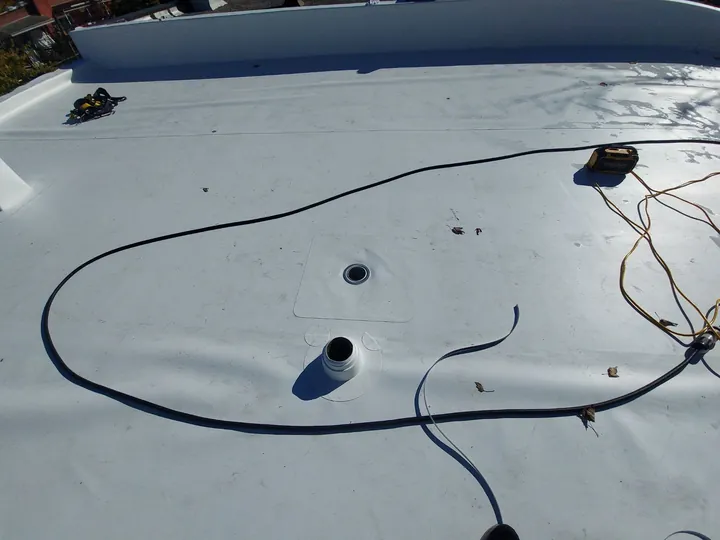
Water visible after rain is not enough to diagnose a slope problem. A blocked outlet, a particular layout or a deformation may require different checks. Document what you can see without accessing the roof and request an assessment of the drainage path.
Describe the water instead of guessing the cause
If the roof is visible from a safe location, record where water remains and when the photograph was taken in relation to the rain. Note whether the same area appears after each event. Mention any indoor leak or apparent change. Do not climb up to measure a puddle or add water as a test. The observations already available are enough to prepare an initial discussion.
Separate drainage outlets from roof slope
A drain is a destination for water; the roof layout needs to allow water to reach it. Ask whether the assessment considers debris, the drain connection, low areas and the route to the outlet. If the issue involves piping or structure, another professional may be needed. Clear responsibilities prevent the assumption that changing the membrane automatically resolves every drainage problem on the building.
Define the expected result
Before accepting work, ask which area is involved and which condition the work addresses. A drainage proposal should connect the observations with the planned changes. Which details remain? How will the situation be documented at completion? What is excluded? This conversation is especially helpful when the roof carries equipment or several surfaces drain toward the same part of the building. The goal is an understandable scope, not a vague promise.
Keep drainage in the follow-up records
Save photographs and the assessment with your maintenance documents. During a later visit, identify the area even if it is dry that day. Ask for a follow-up frequency suited to the system and its surroundings, including nearby vegetation. A seasonal calendar is a planning aid, not a universal rule. This guide helps you prepare questions; it is not a plan for changing slopes or plumbing.
Your practical checklist
- Locate the area and record weather conditions.
- Report any leak or visible deformation.
- Clarify the scope of the assessment.
- Ask about the limits and follow-up of the proposed solution.
Frequently asked questions
Should I wait a set amount of time before calling?
Unusual accumulation, a leak or deformation should be reported without waiting. Technical drainage criteria need to be evaluated for the particular system and building.
Will a new membrane correct a slope issue?
Not by itself. Ask exactly which slope or drainage work is included in replacement, and which work is not.