
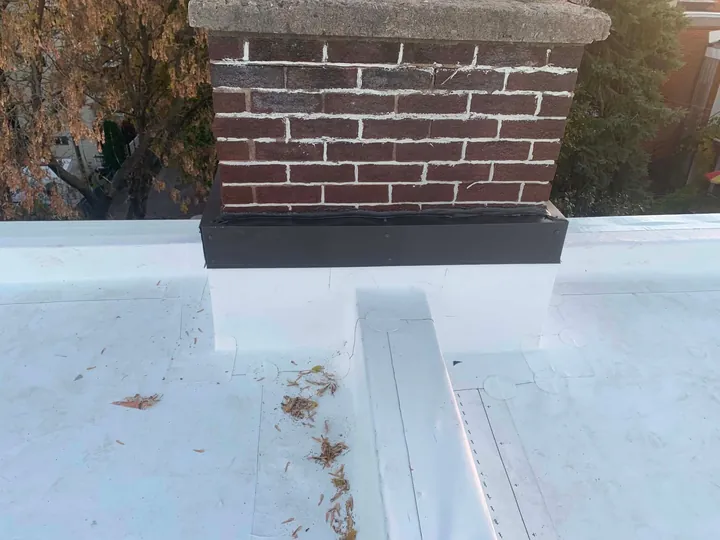
When water appears inside, occupant safety comes first. Keep away from dangerous areas, then record where and when the water is visible. A precise description helps prepare the assessment. A ceiling stain alone does not prove that the roofing membrane is the source.
Assess the indoor situation first
Keep people away from a sagging ceiling, an area where materials may fall or water near electrical installations. If there is immediate danger, leave the area and contact the appropriate emergency services. Do not open the ceiling or touch wet appliances or outlets. Protecting belongings should never require remaining in an unsafe part of the building. Explain any immediate safety concern clearly when asking for help.
Build a short timeline
Record the date, approximate time, affected room and how the stain changes. Note whether it is raining, has recently snowed or is thawing. A wider photograph of the room and a photograph of the symptom, taken from a safe location, can be more useful than close-ups without context. Mention earlier incidents even if the mark later dried. Keep the original photographs together so the progression remains easy to understand.
Prepare a useful call
Provide the complete address, a callback number, the building type and access information. Describe what you can see instead of naming a definite cause. Mention recent work, including visits by other trades. A leak after a visit does not automatically prove a connection, but the information is worth sharing. Ask what the next available step is and which conditions could affect the assessment or timing.
Keep the information after the visit
Save photographs, invoices, messages and observations together. If a warranty may apply, review its reporting requirements and notify the contact named in the document. Distinguish temporary measures from the proposed corrective work. Ask how to observe changes from indoors and when to make contact again. The aim is to address the problem with a consistent record, rather than attempt repeated roof repairs yourself. This guide is not a repair manual.
Your practical checklist
- Complete address and callback details.
- Indoor location and time the water appeared.
- Photographs taken without entering a hazardous area.
- Available leak history, work records and warranties.
Frequently asked questions
Can water appear far from its entry point?
The visible indoor location does not necessarily identify the entry point. An assessment should consider possible water paths and other sources of moisture.
Should I climb up and install a tarp?
A wet, icy or damaged roof presents risks. Leave roof access and protective measures to appropriately equipped, qualified workers; prepare information from a safe location instead.