
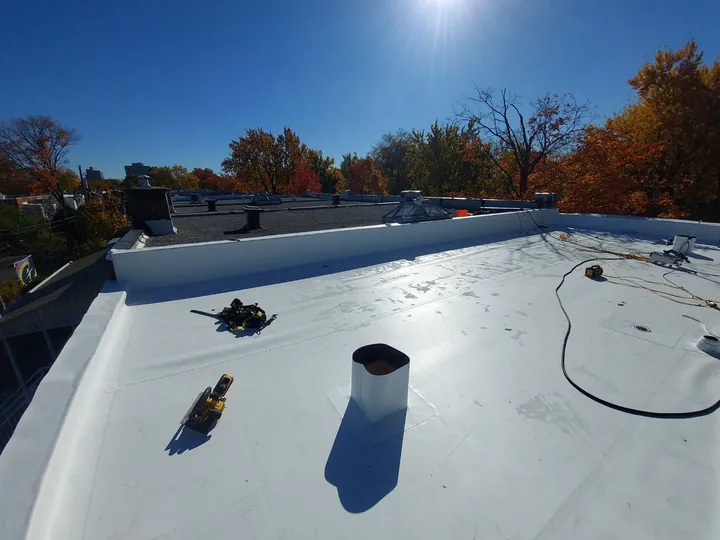
The right decision depends on the extent of the problem, the condition of the assembly and your plans for the building. Ask for an explanation of the findings, the limits of each option and the work included. The age of the covering alone does not settle the question.
Start with what has actually been observed
Before choosing a solution, ask what is known. Where does water appear? Is the problem isolated or recurring? Are photographs of earlier repairs available? A visual observation can guide a discussion without revealing the condition of every layer. A useful proposal separates observations, assumptions and checks that still need to happen. This prevents a detailed repair option from being compared with a replacement recommendation built on untested assumptions.
Understand what a repair will address
A repair should have a clear purpose: addressing an identified defect, restoring a connection or stabilizing a situation before more extensive work. Have the affected area and the components remaining in place described. Ask what findings could change the recommendation. Temporary work can be useful, but it should be identified as temporary, with a next step the owner understands. A promise to fix everything is less helpful than a clearly defined scope.
Compare replacement as a complete project
A reroofing proposal should explain more than the new membrane. What happens to the deck, insulation, drains, upstands and existing accessories? Which components are retained after inspection? If concealed materials are damaged, how will their replacement be priced and approved? These questions clarify both the budget and responsibilities. They also help coordinate other building work, so the roof project is considered alongside equipment changes or renovations you are already planning.
Make the decision fit your household
Explain whether you need to address an active leak, plan work before a move or organize spending for a rental property. Scheduling, access and occupants matter. Request two written options when both approaches are reasonable. At Serge & André, the conversation begins with your building and your family’s questions. A clear next step is more useful than pressure to make an immediate choice. This planning guide is not an installation manual.
Your practical checklist
- Gather invoices, photographs and leak history.
- Ask about the suspected cause and the level of certainty.
- Confirm the inclusions and limits of each option.
- Keep a record of the decision and follow-up.
Frequently asked questions
Does a leaking roof always need replacement?
No. A leak is a symptom to investigate. Depending on the findings, the evaluation may lead to a targeted repair, further checks or replacement.
Can I decide from photographs alone?
Photographs help with an initial discussion, but they may not show the water’s origin or concealed materials. Ask which on-site checks are needed.