
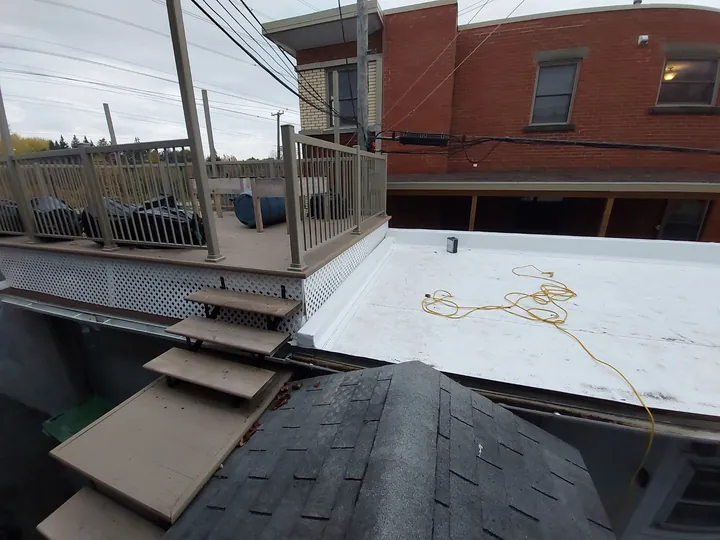
Before work begins, agree on access, the main contact and your household’s practical needs. Discuss noise, movement around the property and areas reserved for work. Planning cannot remove every unknown, but it makes clear whom to contact and how decisions will be made when conditions change.
Explain everyday life in the home
Mention working from home, young children, pets and occupants’ practical needs. You do not need to share medical details; explain the relevant arrangements. Identify when someone can answer questions and appointments that are difficult to move. Ask which parts of the schedule can be confirmed and which depend on weather or findings in the building. Avoid organizing family life around a duration that has not been confirmed.
Plan routes and work areas
Discuss the entrance in use, parking, deliveries and proposed locations for equipment or debris. Ask how occupants will enter the building and which areas will be off limits. Identify fragile belongings, planting and neighbouring-property constraints. Children and pets need to remain outside work zones. Do not move barriers or protection installed by the crew yourself. If a route no longer works for an occupant, raise it with the contact person.
Choose a contact and an approval process
Designate someone who can answer scheduling questions, and provide an alternative if that person is unavailable. Agree on how changes will be approved: a description, photographs where relevant and the cost before a decision. For a building with several households, prepare one shared message about access and expected hours. This reduces the chance of occupants receiving different versions of the arrangements.
Plan completion from the beginning
Ask how cleanup, document handover and the final discussion will take place. Record any outstanding questions before treating the file as complete. Keep a clear follow-up contact and save the description of completed work. At Serge & André, a family approach also means explaining next steps in understandable language. This guide concerns project organization, not roofing installation methods.
Your practical checklist
- Share occupants’ practical constraints.
- Clarify access and parking.
- Designate someone to approve decisions.
- Plan cleanup, document handover and follow-up.
Frequently asked questions
Will we need to leave the house?
That depends on the project and building conditions. Discuss the constraints beforehand rather than assuming staying or leaving works in every situation.
How should I prepare my pet?
Arrange a quiet space separated from entrances and work areas, and tell the crew the pet is present. Adapt the plan to the animal’s behaviour and the site arrangements.