
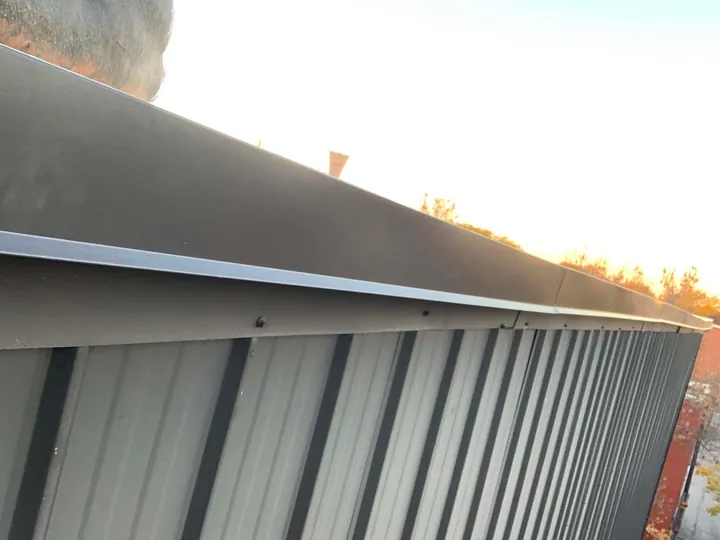
Ground-level observation helps identify visible changes; it does not certify roof condition. Take notes from a safe place, gather the building history and leave roof access to an equipped professional. No visible warning sign does not mean there are no defects.
Walk around without taking risks
Stay in normally accessible areas, away from edges where materials could fall. Look at visible parts of the building: cornices, cladding near the roof, water outlets and metal details. Record a displaced component, an unusual mark or a change since your last observation. Do not lean out of a window or use a ladder to complete the view. An imperfect photograph taken safely is better than a risky angle.
Include what is happening indoors
In accessible rooms, look for new marks on ceilings or upper walls. Mark their locations on a simple room sketch. Note whether they change after rain or at another time. Do not remove finishes to test an assumption. An older stain and active moisture tell different stories; explain what you know and what remains uncertain. Your role is to document the symptom, not to establish its cause yourself.
Prepare records that genuinely help
Gather approximate dates of known work, invoices, warranties and earlier photographs. Record recent rooftop visits for ventilation, communications or other equipment. Explain normal building access and who can authorize a visit. A short, organized file helps focus the appointment on important questions instead of reconstructing the entire history from memory. It is fine to identify a missing date as unknown rather than guess.
Ask for an understandable report
State the purpose of the visit: investigating a symptom, preparing replacement or planning maintenance. Ask for a distinction between areas observed and areas not accessible, along with recommended next steps. If further checks are suggested, ask which question they are meant to answer. You can then decide with a clearer understanding of what has been established. This preparation is neither a remote diagnosis nor a professional inspection manual.
Your practical checklist
- Photograph each observation with its surroundings.
- Record the date and affected room or wall.
- Gather available history without inventing dates.
- List the questions to cover during the visit.
Frequently asked questions
Can I see my entire membrane from the street?
A parapet or the building layout often hides part of a flat roof. Clearly identify unseen areas in your initial description.
Can an inspection guarantee there will never be a leak?
An inspection records the findings and limitations of a visit. It helps guide decisions but is not an absolute promise about all future events.