
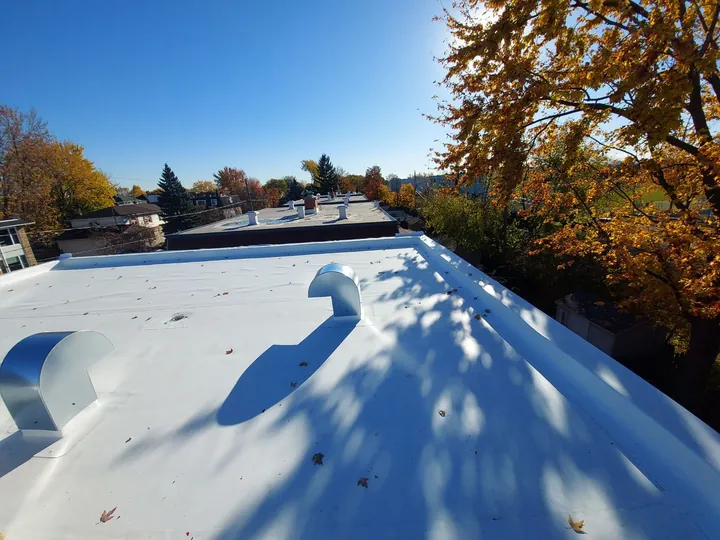
Spring and fall are practical times to review the roof’s condition. They are scheduling checkpoints, not a universally sufficient frequency for every warranty. The plan also needs to reflect the manufacturer, surroundings, weather events and equipment work.
In spring, reconnect the winter observations
Prepare a list of anything noticed during the colder months: a ceiling stain, water entry, a displaced component visible from the ground or snow-removal work. Gather dates and photographs. Ask the professional to explain what can be checked and what requires a separate intervention. The purpose is an updated understanding and an action list, rather than a simple statement that everything looks fine.
In fall, coordinate the different tasks
Review planned visits for ventilation, equipment and roofing. Sharing this information helps avoid one contractor discovering another contractor’s work at the last moment. Mention neighbouring trees and any observed debris without climbing onto the roof. Ask who handles each task and what will be documented. One person in the household or management team should keep the reports together so information does not become scattered.
Between seasons, report changes
Record major weather events, new water entry and rooftop equipment work. Do not assume every concern can wait until the next scheduled appointment. Describe the change and ask whether a check should be brought forward. When several owners or tenants use the building, create a simple way to share observations with the appropriate contact, including the address, affected room and date. Clear reporting is easier to act on.
Build a file someone else can understand
Keep the maintenance plan, reports, photographs and invoices together. Include contractor contact information and warranty documents. After each visit, ask for the completed actions, recommendations and next follow-up. Continuity makes conversations simpler when ownership or management changes. Keep the calendar useful and realistic, with clear responsibilities. This guide is a planning resource, not a cleaning manual or instructions for working at height.
Your practical checklist
- Gather observations from the previous season.
- Coordinate visits by different contractors.
- Confirm the frequency required by the relevant documents.
- Record completed actions and outstanding tasks.
Frequently asked questions
Are two visits a year always enough?
No. Some manufacturers or warranty programs require more frequent care. Review your system’s documents and adapt the schedule to its circumstances.
Can I perform the maintenance myself?
You can organize records and report changes from a safe place. Roof access and work should be handled by qualified, appropriately equipped people.