
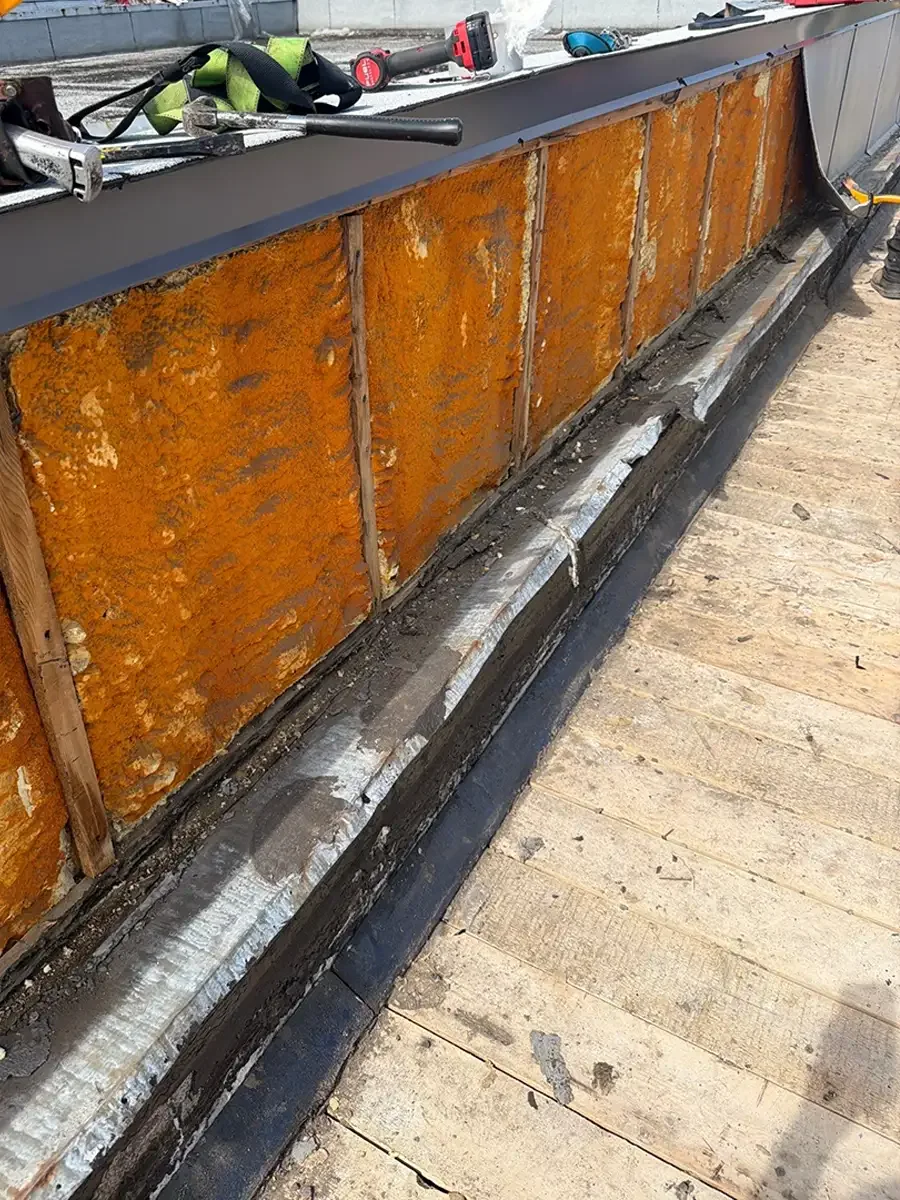
Adding insulation does not automatically resolve a moisture problem. An assessment needs to distinguish water entry, condensation and other possible sources, then consider the existing assembly. The aim is a coherent proposal for the building, with clear checks and limitations.
Describe what you experience indoors
Identify the rooms involved and when discomfort or moisture appears. Is there a cold ceiling, a mark after rain, a problem during very cold weather or a recent change? Mention renovations and changes in use. These observations are not a diagnosis, but they help frame useful questions. Avoid treating every symptom as proof of insufficient insulation before the building has been assessed.
Understand how the layers work together
Insulation, air control and vapour control have complementary roles. Natural Resources Canada notes that air leaks can carry moisture into roof spaces. A flat roof also presents its own configuration constraints. The project is therefore not simply a matter of adding thickness: it needs to consider the system as a whole and the causes of the observed issues. Different roof assemblies should not be treated as interchangeable.
Ask for a precise work description
Clarify which materials will remain, which will be replaced and which checks happen before the assembly is closed. What performance is being targeted, and how is it stated? Which connections or constraints limit the work? If specialized checks are needed, ask who performs them and which decision they will inform. Do not compare thickness alone across different insulation products without understanding their stated characteristics.
Coordinate roofing with the rest of the building
Tell the roofer about planned ventilation changes, renovations or equipment replacement. A shared discussion may help identify interfaces that need attention. Also ask which observations to keep after completion and whom to call if a symptom returns. Comfort or energy savings should not be promised through a generic percentage. This guide prepares your project; it does not prescribe a roof assembly or provide installation instructions.
Your practical checklist
- Record symptoms, rooms and seasonal patterns.
- Gather documents about the existing assembly.
- Separate observations, assumptions and further checks.
- Compare product characteristics and the scope of work.
Frequently asked questions
Does a winter stain necessarily mean condensation?
No. The season is useful information, not proof. An assessment needs to consider possible causes before recommending a correction.
Can existing insulation remain?
That depends on its condition and suitability for the proposed project, among other factors. The decision should follow documented checks, without assuming everything is dry or reusable.