
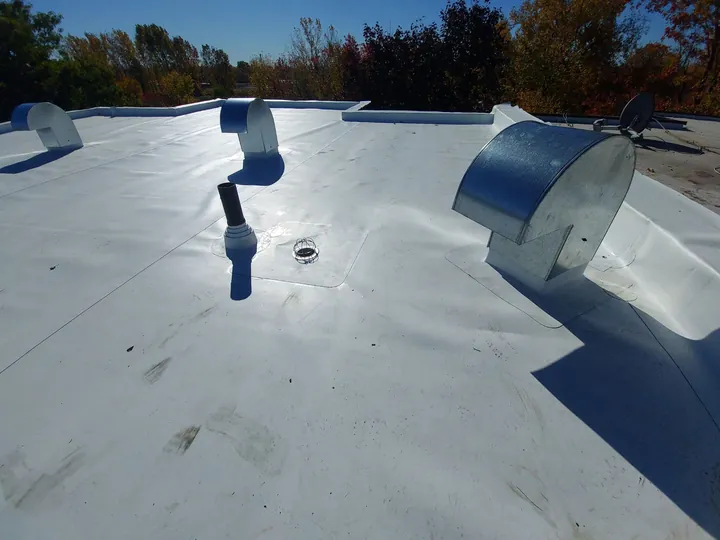
A roof drain, a side outlet and an overflow are not interchangeable parts. Their purpose and placement depend on the building and drainage design. Ask the assessment to identify existing components, affected connections and the boundary between roofing and plumbing work.
Make an inventory without climbing onto the roof
Gather plans, earlier photographs and reports showing drainage outlets. Note known episodes of standing water or leaks. If an exterior outlet is visible from the ground, record its location without trying to dismantle it. Do not assume an opening is unnecessary because you have never seen water flowing through it. Its role needs to be established before any change is considered.
Ask what will actually be checked
A useful discussion distinguishes the membrane connection, outlet operation and piping that may require another trade. Ask where the roofer’s scope starts and ends. If a blockage or plumbing defect is suspected, who coordinates the next step? This division prevents an owner from expecting a membrane repair to address an issue outside the work described. Put unresolved responsibilities in writing before approving the proposal.
Include outlets in the reroofing project
Before replacing the covering, clarify which accessories remain, which change and how their connections will be handled. Mention planned equipment or rooftop layout changes. The proposal should link the details to the selected system rather than improvise an assembly of incompatible accessories. Outlet size, number and location should not be chosen from a rule found in a general article. They need to fit the building’s requirements.
Keep follow-up simple and consistent
Ask for completion photographs and identification of points to review during maintenance visits. Centralize occupant reports and completed work. If water begins following an unusual route, describe the change and have it assessed. Do not block an outlet to stop inconvenient discharge. This guide organizes questions; it does not replace drainage calculations, a plumbing design or installation instructions.
Your practical checklist
- Identify outlets using available records.
- Clarify roofing and plumbing responsibilities.
- Confirm accessories being retained or replaced.
- Plan observations and follow-up documents.
Frequently asked questions
Can an outlet that never seems to run be closed?
Do not close it without determining its role. An opening may form part of a planned function that is not visible during normal conditions.
Whom should I call if water backs up or accumulates?
Promptly describe the situation to a professional and mention indoor symptoms. Depending on the findings, assessment may involve a roofer, plumber or another specialist.