TPO, SBS modified bitumen and tar-and-gravel roofing belong to different system families. Compare the proposed assembly, connections, installation conditions and maintenance. A useful decision goes beyond colour or a price per square foot.
Identify the existing system and the project
Start with available records: an earlier invoice, the membrane description and repair history. A general photograph does not always identify a specific product. Then explain your goal: replacing a covering, addressing a leak or reviewing insulation. Defining the work comes before choosing a brand. Ask which components could remain and what checks support that decision. This gives you a clearer basis for comparing proposals.
Understand the basic differences
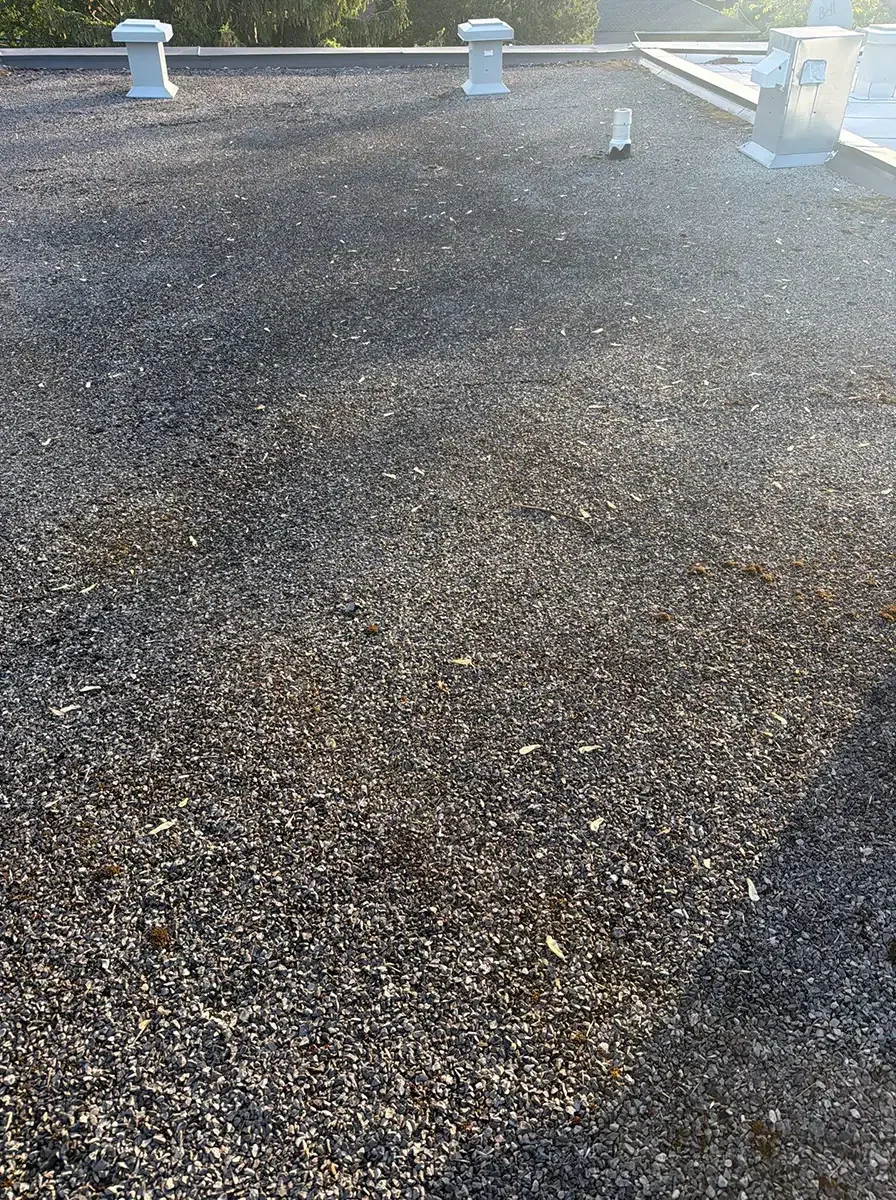
TPO is a thermoplastic membrane with hot-air-welded seams. SBS systems use modified bitumen and commonly include a base sheet and a cap sheet. Tar-and-gravel roofing refers to a built-up bituminous covering protected by aggregate. These are descriptions of system families, not installation instructions: products, substrates, fastening and approved methods must be checked for each assembly. Similar-looking surfaces may be part of very different roof designs.
Compare the same items in every estimate
Ask each contractor the same questions. Which exact covering is proposed? What work addresses the deck, slopes, insulation and drainage? How are penetrations and parapets handled? Which checks and documents are included? A consistent comparison makes it easier to see whether a price difference comes from a material or a different scope of work. It also gives you specific questions to ask instead of comparing marketing claims.
Choose around your home’s constraints
Consider roof access, existing equipment, building occupancy and municipal requirements for your address. Ask how these affect the proposal. Serge & André specializes in TPO flat roofing; this comparison also helps you understand a different existing covering. It does not mean every membrane family is offered for installation. The recommendation should remain connected to the actual building, with its limitations explained. Product documentation should support any detailed technical comparison.
Your practical checklist
- Identify the exact product, not only its family.
- Compare an equivalent scope of work.
- Request the relevant technical data sheets.
- Clarify maintenance and warranties in writing.
Frequently asked questions
Is every white roof made of TPO?
No. Colour alone does not identify a roof’s composition. Review the system documents or have the covering assessed.
Which material lasts the longest?
A universal ranking would be misleading. The assembly, installation, surroundings and ongoing care affect the outcome. Ask how the proposed system responds to the conditions observed.